

Finding the Few - Part 1
The Importance of “Knitted” Relationships
Maybe “going to church,” more than anything else, means relating to several people in your life differently. Maybe the center of Christian community is connecting with a few… (Larry Crabb, Connecting, 1997)
What’s wrong with this picture?
I find myself asking, “What’s wrong with this picture?” every time I hear about the fall of a prominent Christian leader, which, unfortunately, is not rare. In fact, it’s becoming so frequent it almost seems inevitable.
What starts with humility and a genuine desire to serve others begins to grow and have influence. Surrounded with success and accolades, the leader begins to have an exaggerated opinion of his own importance. Slowly the original virtue corrupts.
But there’s nobody who loves him enough to speak the truth. The David has no Nathan… that’s what’s wrong with this picture! Though he’s surrounded by lots of people and activity, he’s alone, and “woe to him who is alone when he falls.”¹
It’s not just Christian leaders, either. It’s the rank and file among us, the ones you thought were so reliable. “Oh no, tell me it ain’t so!” And each failure leaves a wake of devastation and loss of faith among those who had trusted them.
The takeaway from the thoughts that follow is simple: every follower of Christ needs a band of four or five honest and loving friends with whom they collectively walk in the light, offering each other affirmation, challenge, a place for confession, and care.
The pastor needs this. The missionary needs this. The schoolteacher, the lawyer, the parent, the student… every follower of Christ! The result: the likelihood of loss decreases, and the likelihood of long-term fruitfulness increases.
The Importance of Substructures
These little hubs of relationships become substructures of larger things. Let’s think about these spiritual “substructures.”
Undergirding nations, cities, and communities, God has designed the family to be the smaller substructure. Just as cells and organisms are made up of individual molecules, families are meant to undergird larger social structures. When families fail, societies fail.
Similarly, God has a substructure designed to undergird that fascinating society called the Body of Christ. The lack of these substructures can cause churches, small or large, and even other dynamic movements, to be short-lived and fail.
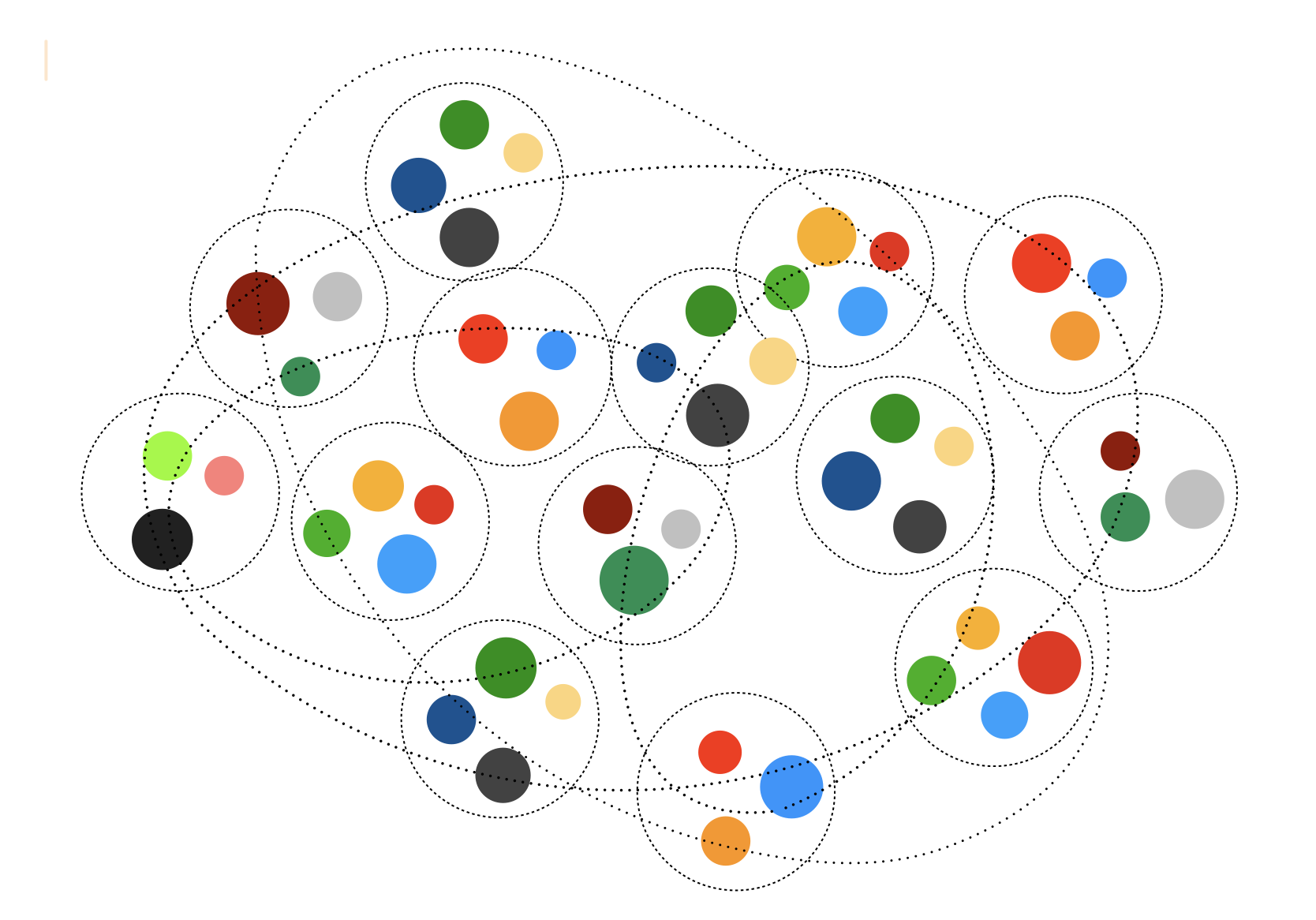
What is the microcosm God designed to undergird the global Church? Reasonable answers might include “denominations” or “congregations.” But let’s look even more closely. Within congregations, you probably have small groups. And within small groups, you sometimes have smaller-than-small groups, or what we’ll call “knitted relationships.” These high-trust, light-filled hubs of fellowship, I believe, are the undergirding substructure of the larger church.
As you read on, ask yourself if you are an active part of a similar hub. Whoever you are, whatever your role, ask the Lord to lead you to find the few that he has ordained for you.
Substructures and Revival
Consider how these substructures undergird revivals.
Revivals are special times of God’s presence among his people. God’s kingdom activity is always accelerated during revivals, the Church’s population expands, and its influence grows.
But revivals come and go. Some are short-lived; some have longer lifespans.
Although the effects of the First Great Awakening in America continued for quite a while, the revival itself is said to have lasted only about 20 years, from the 1730s through the 1740s.
The Welsh Revival lasted only about a year; the Jesus Movement, eight to ten years.
But the Wesleyan revival continued for approximately a hundred years, from 1738 into the 1840s!
What made the difference? Historians of the movement note various characteristics of the Wesleyan revival, including (1) an emphasis on personal experience, (2) a clear Gospel message, (3) field preaching, and (4) trained lay preachers.²
But they go on to say that the key reason for the longer length of the Wesleyan revival was that John Wesley didn’t just preach; he organized his adherents into small groups. And he organized them in a particular way, a way that included three tiers of fellowship: Societies, Classes, and Bands. Or in our terms:
Congregations,
Small groups (10–12), and
Smaller-than-small groups (usually 4–5 people).
This way of organizing wasn’t a clever innovation. It was, I believe, a discovery of God’s intended substructure of the Church, a discovery we need to make again in the 21st century.
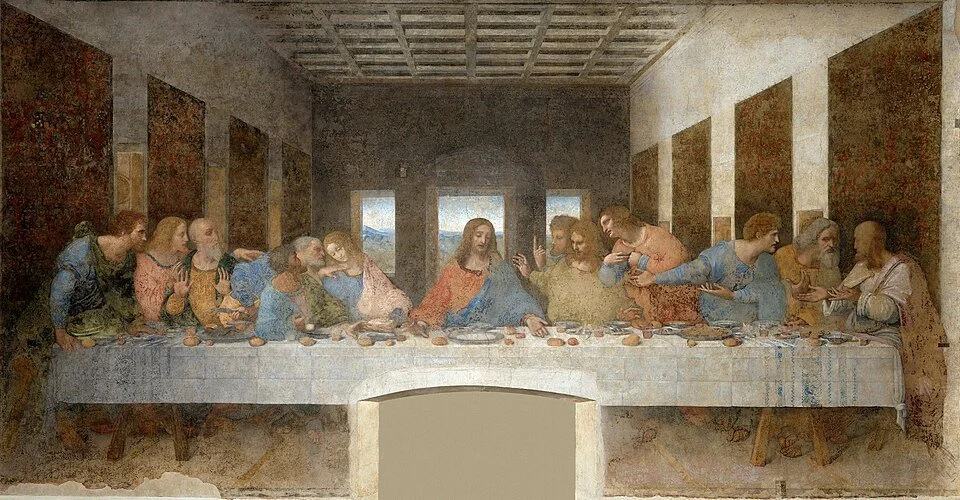
Even Jesus had his seventy, his twelve, and his three. And I’m guessing that the other nine disciples each had their bands of three. Look again at da Vinci’s Last Supper: he painted the twelve in four groups of three.
(Incidentally, bands are beginning to be practiced again among some renewal-oriented Methodists.³)
“The Sinews of Our Societies”
Here’s the story of how the Wesleyan movement began to employ bands and classes in the 18th century. (It gives me hope for our century.)
After years of dutiful but ineffective religious service, including serving as a foreign missionary among the Indians in Georgia, John Wesley had an evangelical awakening on May 24, 1738, at a home meeting on Aldersgate Street in London, where he felt his “heart strangely warmed.”
Soon afterward, he joined a Moravian-influenced religious society in Fetter Lane that had within it subgroups called bands.
By 1739, Wesley was busy forming bands among his followers in London and Bristol. A band would be 4–5 men or 4–5 women and would meet weekly. There was no prominent leader; instead, oversight was through peer relationships. Band meetings were not for instruction, but rather for examination, confession, and support. Each member was asked about sins and temptations. Prayers were made for one another.
These are somewhat similar to today’s accountability groups, but more direct. Today’s approach would be more therapeutic and affirming, whereas bands were more serious and urgent. Fundamentally, the difference has to do with confession of sin.
The “confessional inquiry” practiced in bands, “How is it with your soul?”, made room for straightforward acknowledgment of sin and for expressing the need for forgiveness and power to overcome. Tears were common; conviction was deep.
In the next several years, Wesley’s preaching in Bristol and the undergirding structure of bands ignited revival. Hundreds of new converts were drawn in. But not all of them joined bands, and Wesley needed a way to give the new converts more personal care. The answer came almost by accident.
In February 1742, the Bristol society met to discuss how to pay off the debt on its new meeting house, the New Room. A Captain Foy proposed that every member give a penny a week. The society was divided into groups of about twelve, each with a leader to collect the pennies. As the leaders made their rounds, they discovered that some members were not living as they should.
Wesley saw the possibilities at once. “This is the thing,” he wrote, “the very thing we have wanted so long.”⁴ Soon the leaders were gathering their groups weekly instead of going house to house, and the class meeting was born.
Classes were normally about 12 people, men and women, and were led by faithful men and women whom Wesley had trained. To be part of a society, class membership was required; bands remained voluntary. Discipleship training happened in these classes, and lay leaders were given the opportunity to be class leaders.
Wesley later described what happened:
Many now happily experienced that Christian fellowship of which they had not so much as an idea before. They began to ‘bear one another’s burdens,’ and naturally to ‘care for each other.’ As they had daily a more intimate acquaintance with, so they had a more endeared affection for each other.⁴
By that definition, classes were becoming spiritual households, loving and supporting communities. Multiplying these classes allowed the movement to scale.
So now, the Wesleyan movement was structured for three tiers of fellowship: societies, classes, and bands.
For most of the next hundred years, the weekly class meeting was the door into Methodism. To be a Methodist meant meeting with your class.
The numbers grew rapidly, especially in the last 50 years of the revival. Wesley died in 1791, but the explosive growth continued until the 1840s.
Then a decline began to set in. Class attendance grew lax, and bands waned. Tragically, the substructure of classes and bands slowly dwindled. By the 1880s, British Methodism’s Conference had quietly conceded that class attendance could no longer be enforced, and in 1912 it dropped the requirement altogether.⁵ Basically, the movement abandoned “finding the few” in exchange for “finding the many.”
Wesley had warned against neglecting the bands. In a letter to Edward Jackson in January 1781, he wrote, even in a season of growth:
Be diligent in restoring the bands; no Society will continue lively without them.⁶
And,
Never omit meeting your Class or Band… These are the very sinews of our Society; and whatever weakens, or tends to weaken, our regard for these, or our exactness in attending them, strikes at the very root of our community (emphasis added).7
Sinews is the perfect word. It means the parts of a structure that give it strength or bind it together.
Much more could be said of this great revival, especially its emphasis on the hearty singing of great hymns, discipleship, social engagement, and holiness. But the way the revival was organized, with a substructure of honest relationships upholding the larger, more visible superstructures, is our lesson at hand.
Knitted Relationships
The reason to examine the social substructure that sustained the Wesleyan movement’s vitality is not primarily organizational, but relational. That is to say, just organizing the way they organized is insufficient. We want to learn how to relate to one another the way they did, by finding the few and forming deeper bonds as they did.
The term that describes that kind of bond is “knitted.” They had knitted relationships.
To be “knit together” means to be joined, united, or brought together closely. The underlying idea is that individual elements are woven together in a way that produces strength, cohesion, and continuity.
How many believers today actually have relationships like that? Survey data suggest a small minority. Piecing together research from Pew, Barna and Gallup, a fair estimate of self-identified Christians is that 80% or more lack bonded relationships with other believers.
Interestingly, Gallup researchers used three categories: Engaged, Not Engaged, and Actively Disengaged. They described the Disengaged as those who “may attend services regularly, but they are not psychologically bonded to their congregation” (emphasis added). And Actively Disengaged would be even less so. Bonded is a close synonym of knitted.⁷
Over three quarters of your brothers and sisters in Christ are without bonded relationships! They are in churches and out of churches. They are the ones who need to find the few. They include pastors and leaders, and the majority of ordinary believers as well.
In 1 Samuel 18:1, we learn that God knit Jonathan’s soul with David’s.
…the soul of Jonathan was knit to the soul of David, and Jonathan loved him as his own soul.
The result of God knitting their hearts was that Jonathan loved David “as his own soul.” He loved someone outside of himself in the same way he loved himself.
They made a covenant with one another, and their lives began to strengthen one another. Jonathan supported David even though his father, Saul, became jealous of David and tried to kill him.
Before the story of David and Jonathan, there was the story of Ruth the Moabite and Naomi. Ruth loved Naomi and clung to her even in Naomi’s destitution. She wanted to go wherever Naomi went. She loved Naomi beyond loving her own life. If she had loved only herself, she would never have met Boaz and become part of the family that gave us King David and our Lord Jesus.
The legendary friendships among C. S. Lewis, J. R. R. Tolkien, and Hugo Dyson were similar knitted relationships. They encouraged one another and critiqued one another’s works in the informal literary group at Oxford called the Inklings. Tolkien probably would not have completed The Lord of the Rings without Lewis’s insistence that he persevere to finish it. And it was a long late-night conversation with Tolkien and Dyson on Addison’s Walk in 1931 that helped bring Lewis from atheism to Christianity.
Do we have such relationships? Do we even believe we could or should have such knitted relationships? We may think those stories are rare, unique to legendary historical characters, but not to be expected for ordinary folks like us.
If that is your opinion, allow me to disagree. God wants that for you, and for everyone you know, as well. He wants your soul to be knitted to a few whom you will love as your own soul, which you can’t, in reality, do with the many.
The apostle Paul wrestled in prayer for the Colossians, as he would for us,
…that their hearts may be encouraged, being knit together in love, to reach all the riches of full assurance of understanding and the knowledge of God’s mystery, which is Christ. (Colossians 2:2, ESV, emphasis added)
And he wrote of
…the Head, from whom the whole body, nourished and knit together through its joints and ligaments, grows with a growth that is from God. (Colossians 2:19, ESV, emphasis added)
Maybe you think those references to being knit together mean you’re equally close to everyone in your larger group. But think about your own body. Is your elbow joined with your ear or your knee in the same way it is joined to your upper arm and your lower arm? Of course not. But by accepting its place in your body, it becomes a functioning part of the whole body.
You will find your place in the Body of Christ when you begin to enjoy knitted relationships with the few.
(Go to Part 2 for the remainder of this article. In Part 1, we learned of the importance of finding the few. In Part 2, we’ll discuss how to identify the few in your life, and how relating to them is different from other relationships. Click here to read on.)
Notes
Ecclesiastes 4:10.
For the history of Wesley’s small groups, see D. Michael Henderson, John Wesley’s Class Meeting: A Model for Making Disciples (1997); Howard A. Snyder, The Radical Wesley (1980); and Kevin M. Watson, The Class Meeting (Seedbed, 2014). Watson argues that the class meeting was “the single most important factor” in early Methodism’s growth.
See “What Discipleship Bands Do” at Seedbed.
John Wesley, A Plain Account of the People Called Methodists (1749).
W. W. Dean, “The Methodist Class Meeting: The Significance of its Decline,” Proceedings of the Wesley Historical Society 43 (December 1981).
John Wesley, letter to Edward Jackson in January, 1781. The Letters of John Wesley, edited by John Telford, specifically in Volume VII, Page 47.
Pew Research Center, 2023–24 Religious Landscape Study (62% of U.S. adults identify as Christian); Barna Group, “Faith’s Shrinking Influence” (2025: practicing Christians are 24% of U.S. adults); Albert L. Winseman, “U.S. Congregational Engagement Stable”, Gallup, March 3, 2006 (a survey of congregation members). The estimate combines these surveys: practicing Christians are roughly four in ten self-identified Christians, and fewer than a third of congregation members are Engaged, which leaves engaged believers at perhaps one in ten to one in five. My own informal survey, described in “Gather the Scattered,” came to a similar figure: only about 12% “True Members.”
*************************************
Click here to Comment • Click here to view as pdf • Please feel free to share with others
Click here to receive Bits & Pieces • Come visit us